
Scaling growth in the defence industry.
AI-supported business development, tenders and lifecycle service – in the cloud or in your own data centre.
Growth creates process pressure
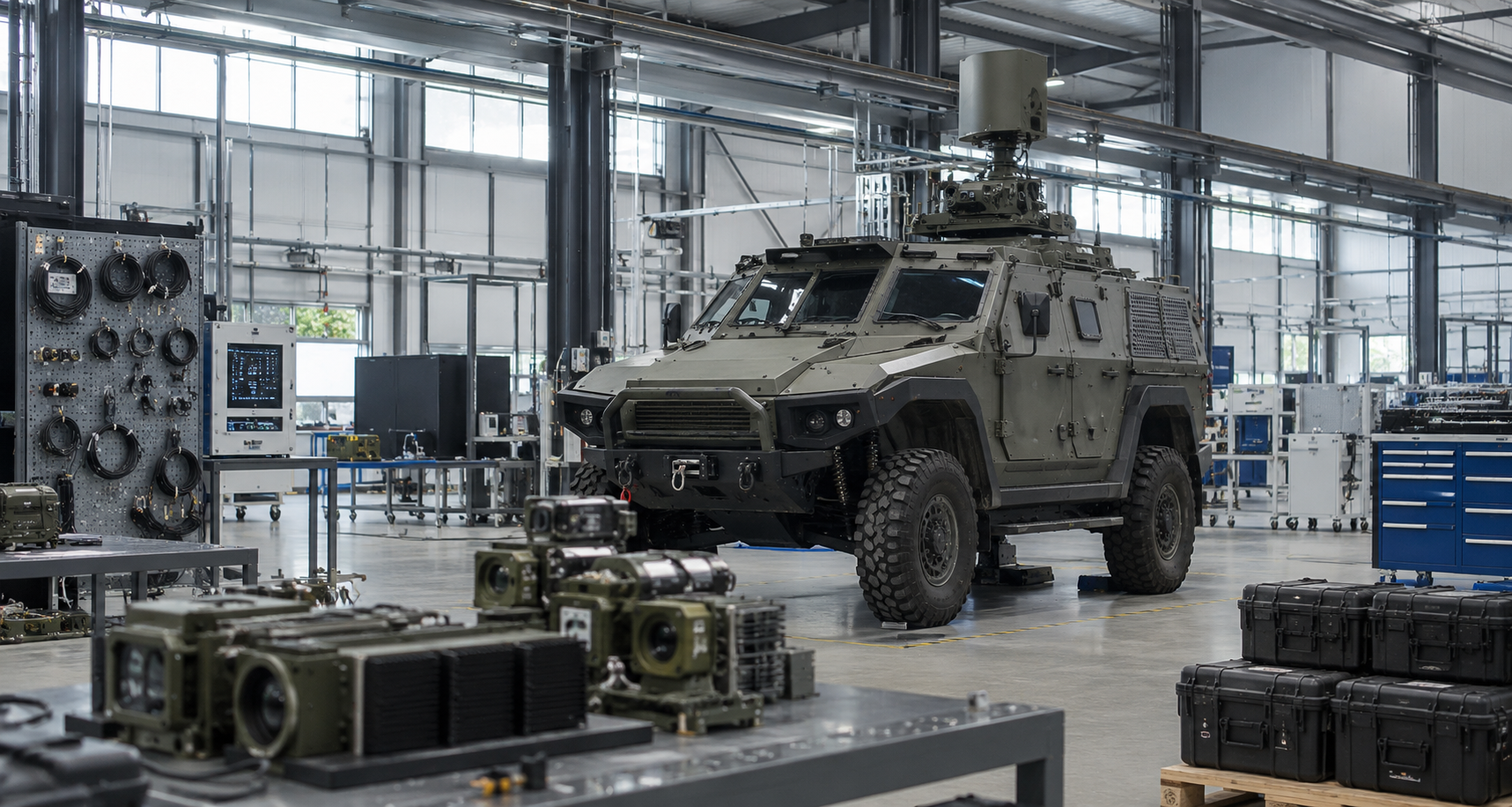
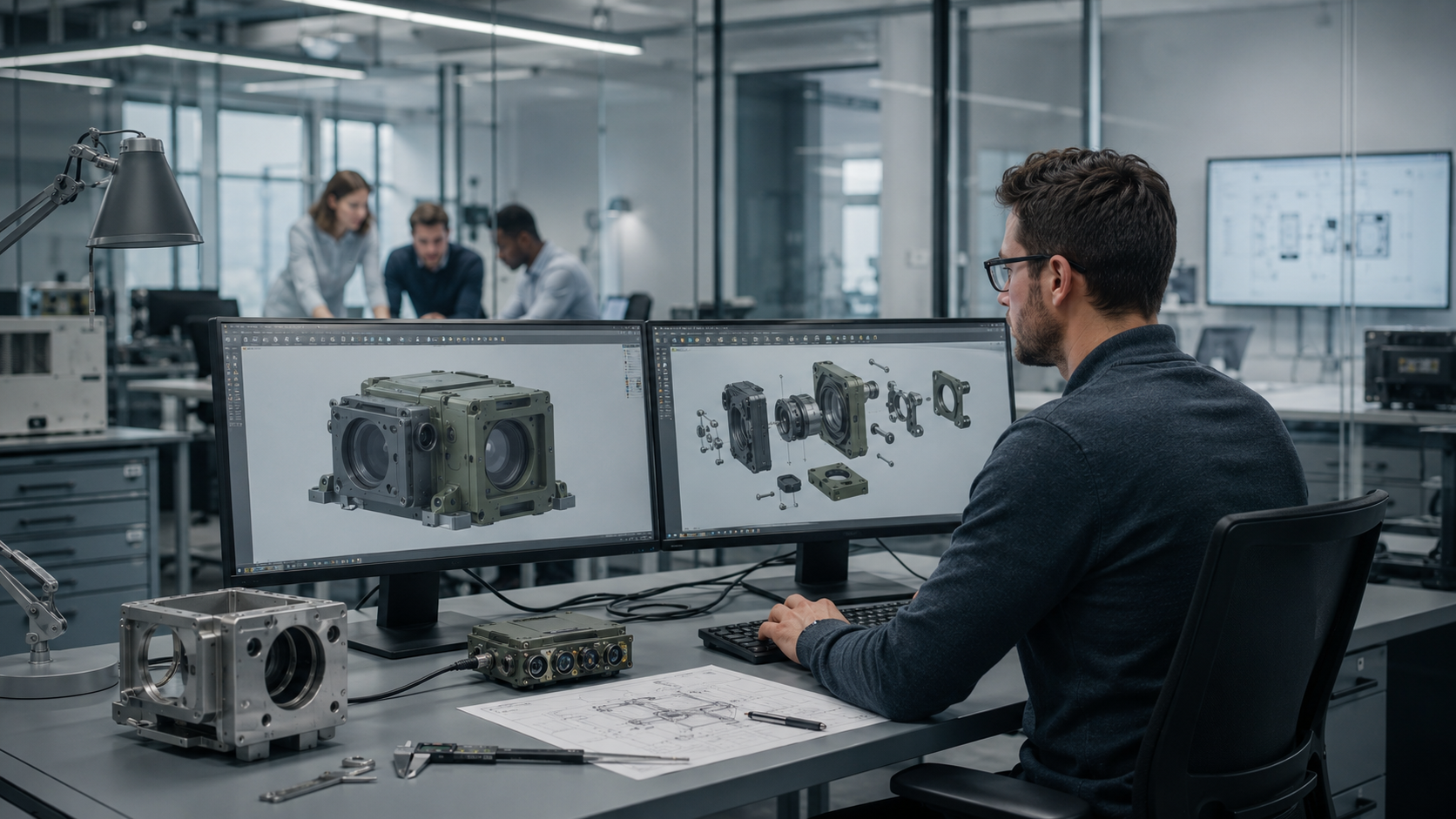
Europe’s defence industry is growing faster than it has in decades. But rising order volumes bring more programmes, tenders, partners, approvals and long-term service commitments.
Mid-sized companies feel this first: what worked for years with Excel, Outlook and isolated tools becomes the bottleneck once volume and complexity rise at the same time. It isn’t production that limits growth – it’s the commercial and administrative processes behind it.
Three processes, one platform
Capture programmes, accounts and stakeholders systematically, assess market potential and manage opportunities with a capture plan – instead of spreading them across spreadsheets and inboxes.
From tender to approved submission in a single process: bid/no-bid, costing, contributions, deadlines and internal approvals traceable in one place.
Move won contracts into service under control: handover, service cases, escalations and a reliable customer history across the entire lifecycle.
AI inside the process, not beside it
AI agents support the work where information volume and time pressure are highest: analysing tender documents, extracting requirements, preparing drafts, classifying service cases. Review and approval stay visibly with the person accountable.
Creatio is model-agnostic. Alongside OpenAI and Azure OpenAI, models from other providers and your own LLMs can be connected – and the choice can be made per AI agent. Via the Model Context Protocol, existing systems such as Confluence, Jira or document repositories can be added as context sources, so agents work with the documentation your teams already maintain. Role-based access, human-in-the-loop and audit trails are part of the platform.
Selected references

PSI Software SE
Group-wide CRM transformation for a provider of industrial software in critical infrastructure contexts – described by Creatio as considerably faster than comparable projects.

DFS Aviation Services GmbH
Comprehensive bid and tender management for complex airport projects with order volumes in the tens of millions – many contributors, hard deadlines, high evidence requirements.
PSI Software SE
Group-wide CRM transformation for a provider of industrial software in critical infrastructure contexts – described by Creatio as considerably faster than comparable projects.
DFS Aviation Services GmbH
Comprehensive bid and tender management for complex airport projects with order volumes in the tens of millions – many contributors, hard deadlines, high evidence requirements.
Frequently asked questions
Yes. Creatio documents three deployment models: Creatio-managed cloud, customer-operated cloud, and on-premises in your own data centre. Creatio.ai services can also be deployed on-site. Which architecture makes sense for you is something we work out per project.
No. Creatio connects OpenAI and Azure OpenAI through ready-made connectors. Beyond that, models from other providers – such as Anthropic Claude or Google Gemini – and your own LLMs can be connected via LiteLLM support, in some cases with additional configuration. The model can be chosen per AI agent. Creatio.ai also supports the Model Context Protocol (MCP), allowing external systems such as Confluence, Jira or document repositories to be used as context sources.
That depends on the architecture you choose. External model or auxiliary services create corresponding data flows. Full locality requires that the LLM, embeddings and integrations run locally and have been verified. We assess this against your target architecture rather than making blanket promises.
Yes. Creatio.ai supports the Model Context Protocol (MCP) and can use external tools such as Confluence, Jira or document repositories as context sources. For bid management this means documents and requirements stay where they are maintained and become usable within the process – rather than circulating as copies through inboxes.
A focused discovery workshop: we map one concrete process, including the people involved, the systems, the risks and a realistic pilot approach. The result is a sound assessment, not a presentation.